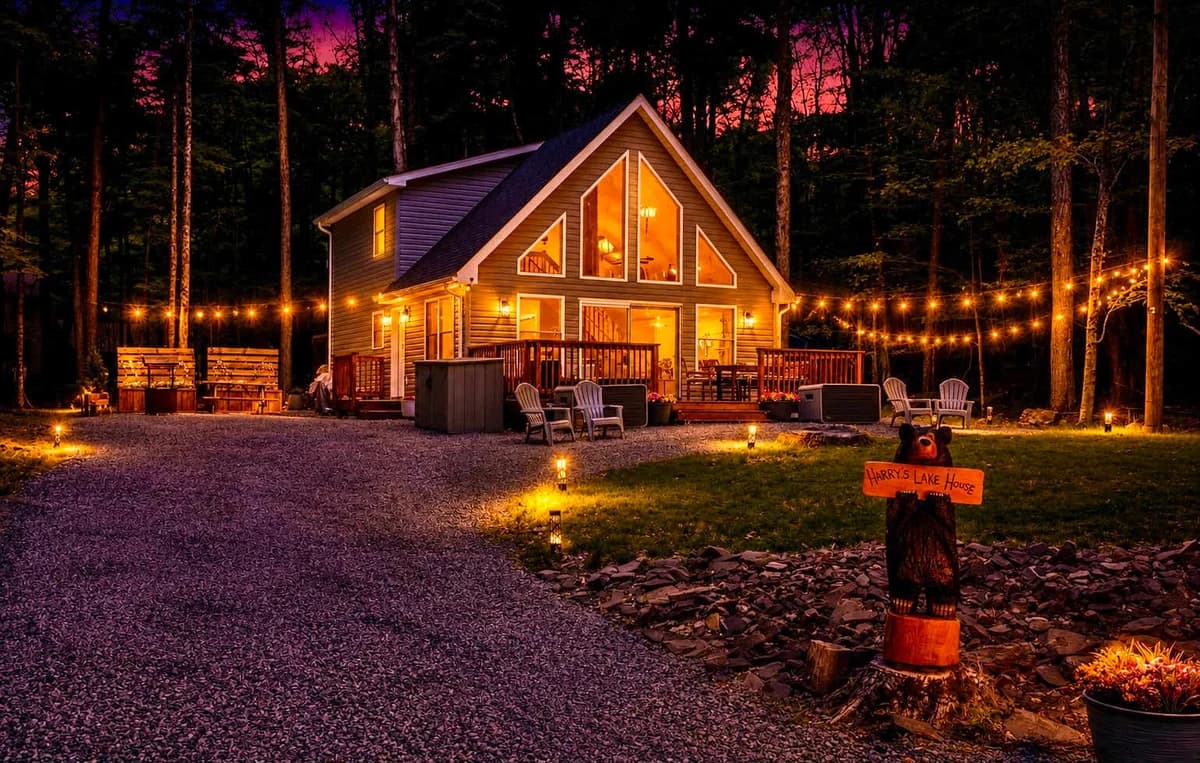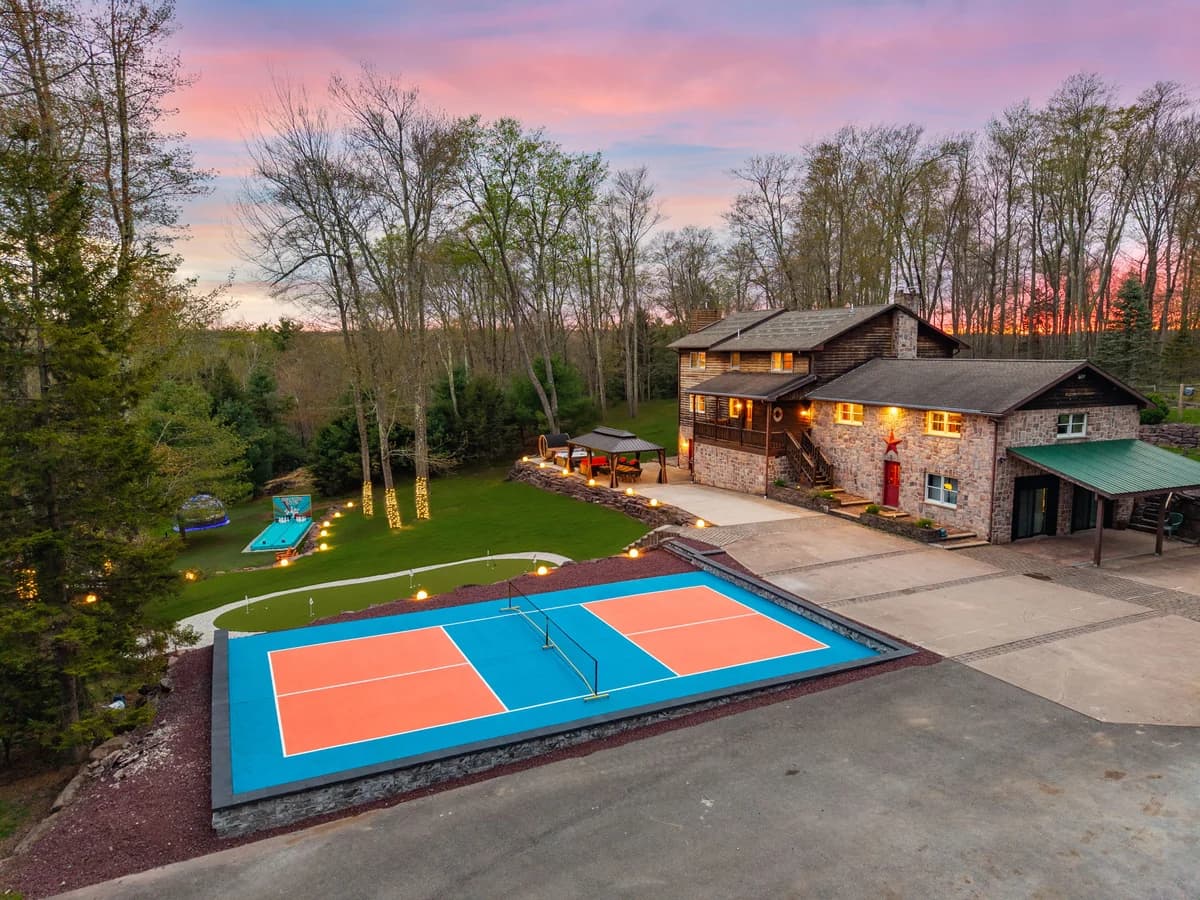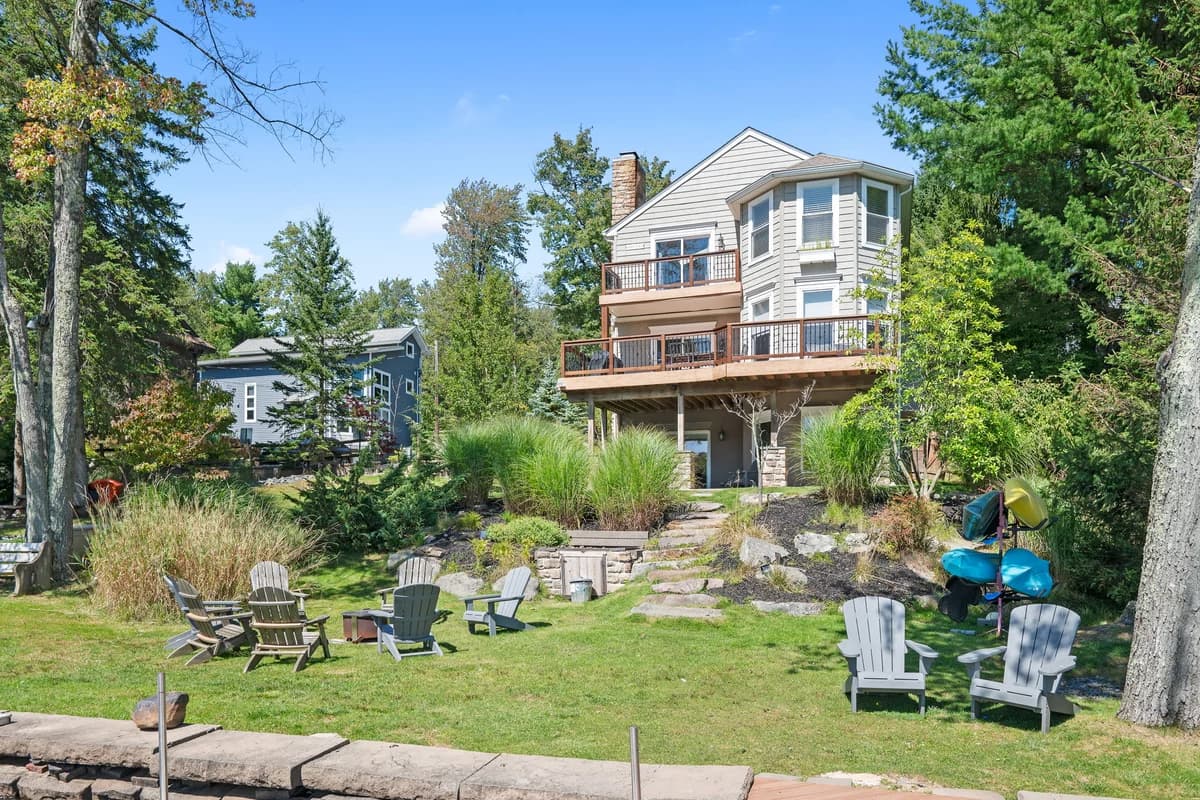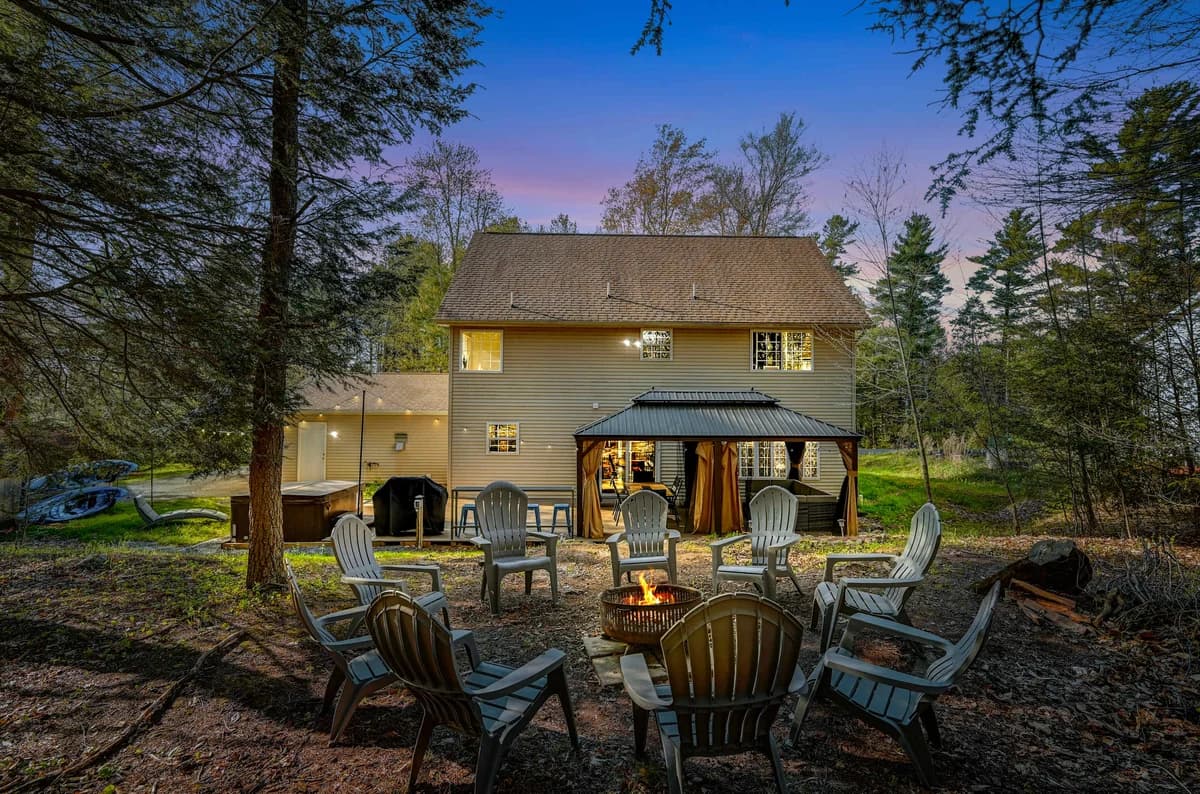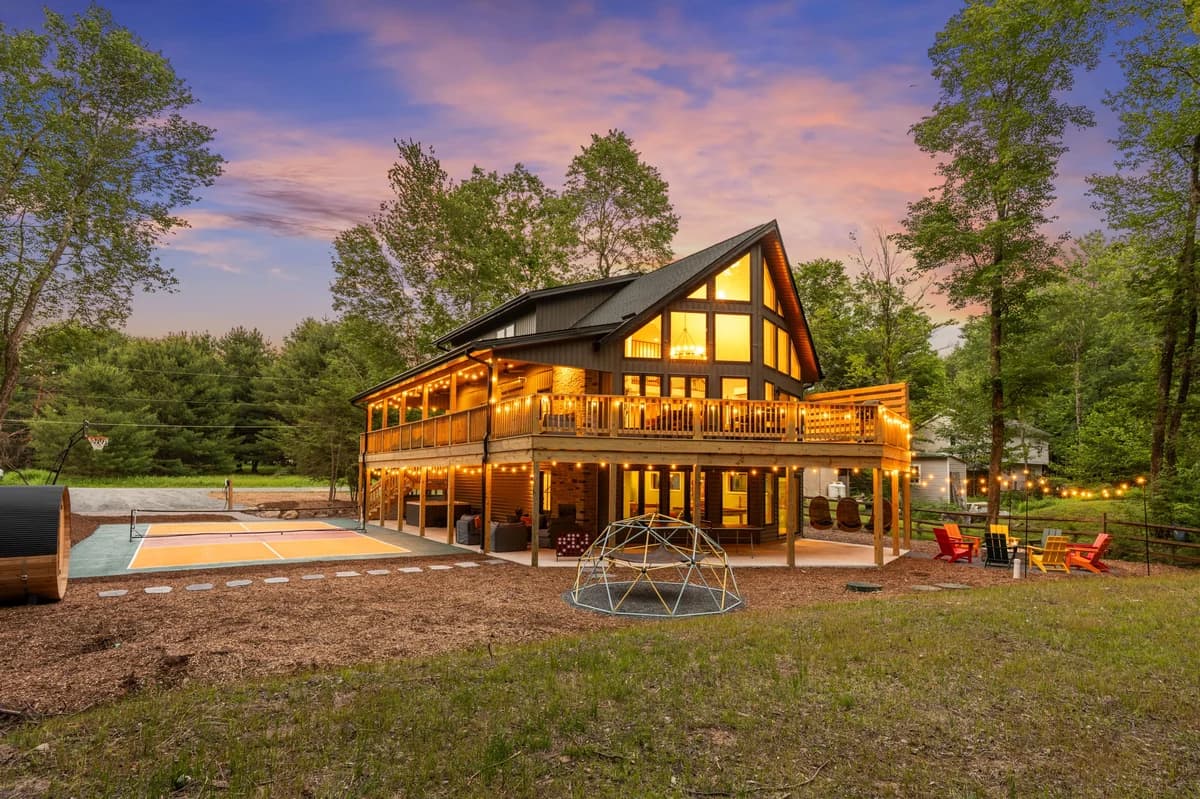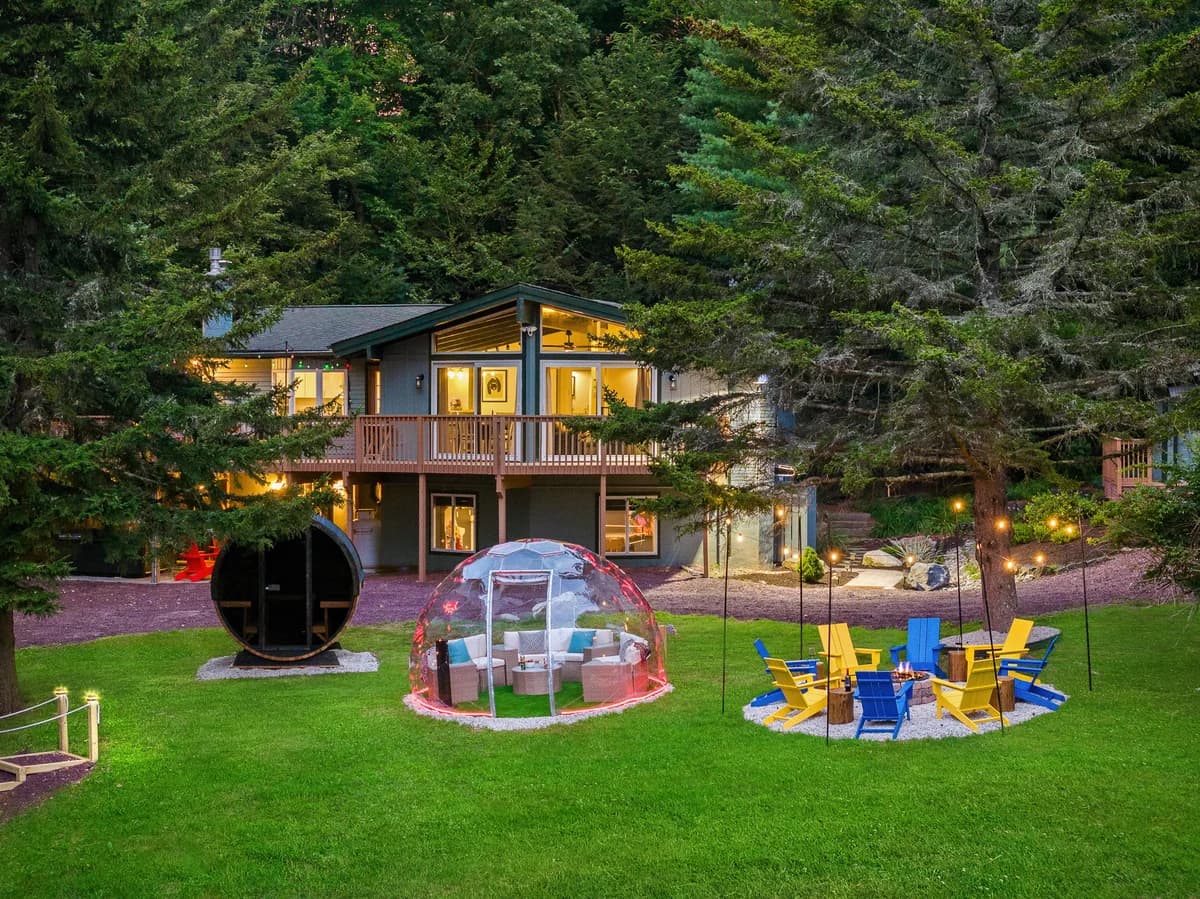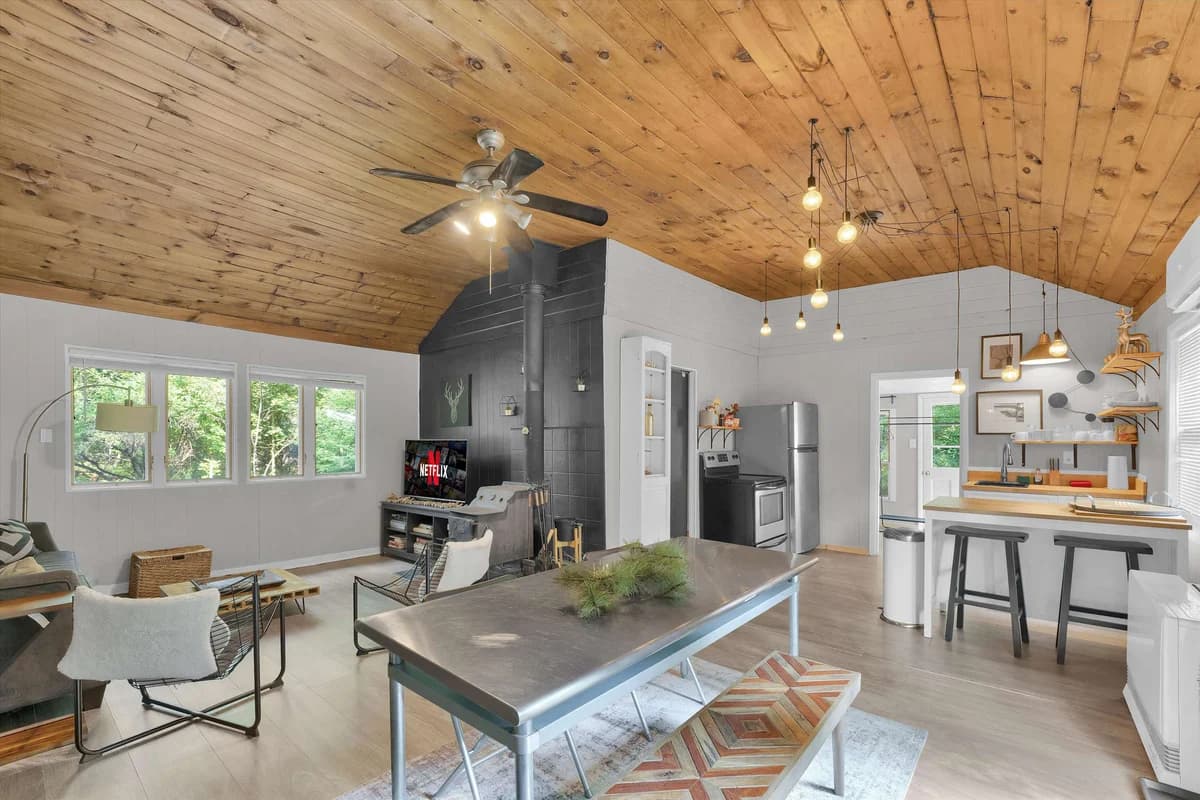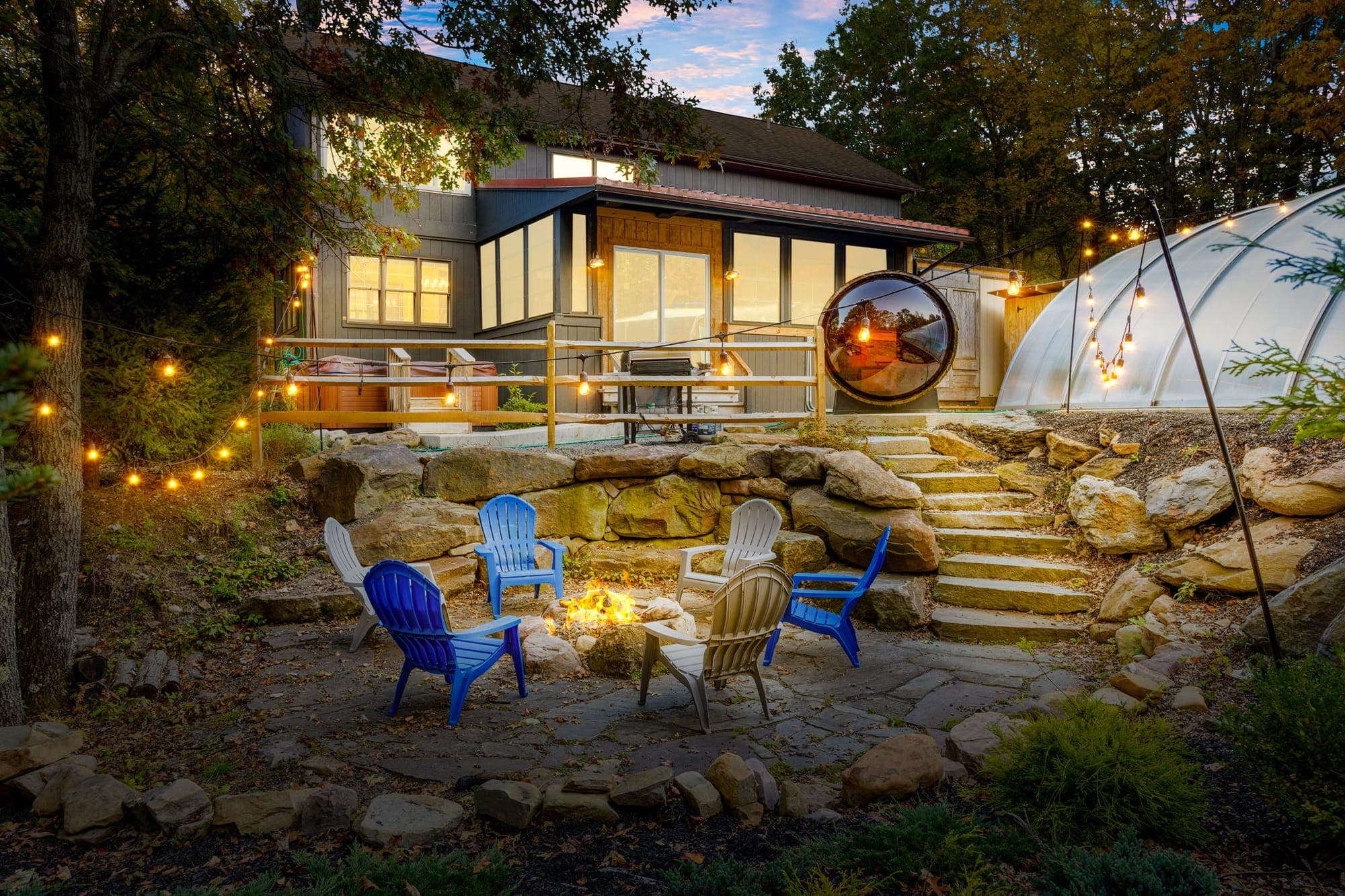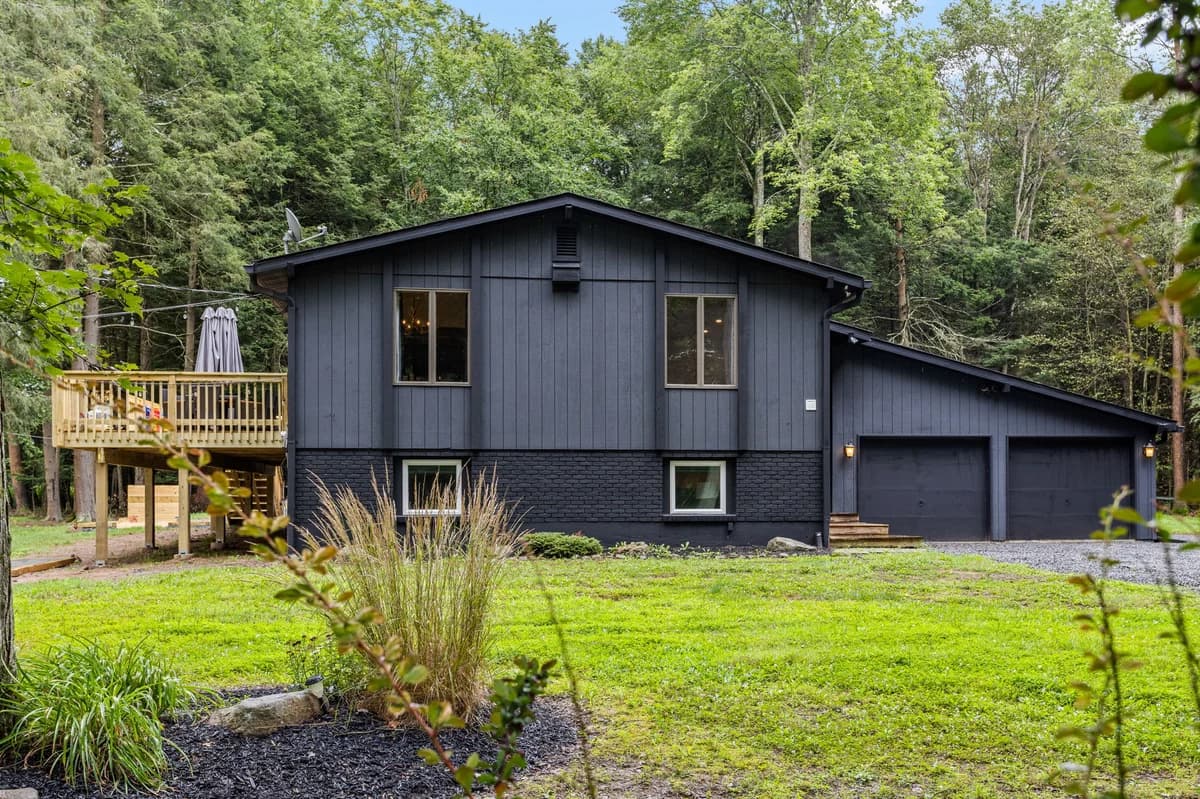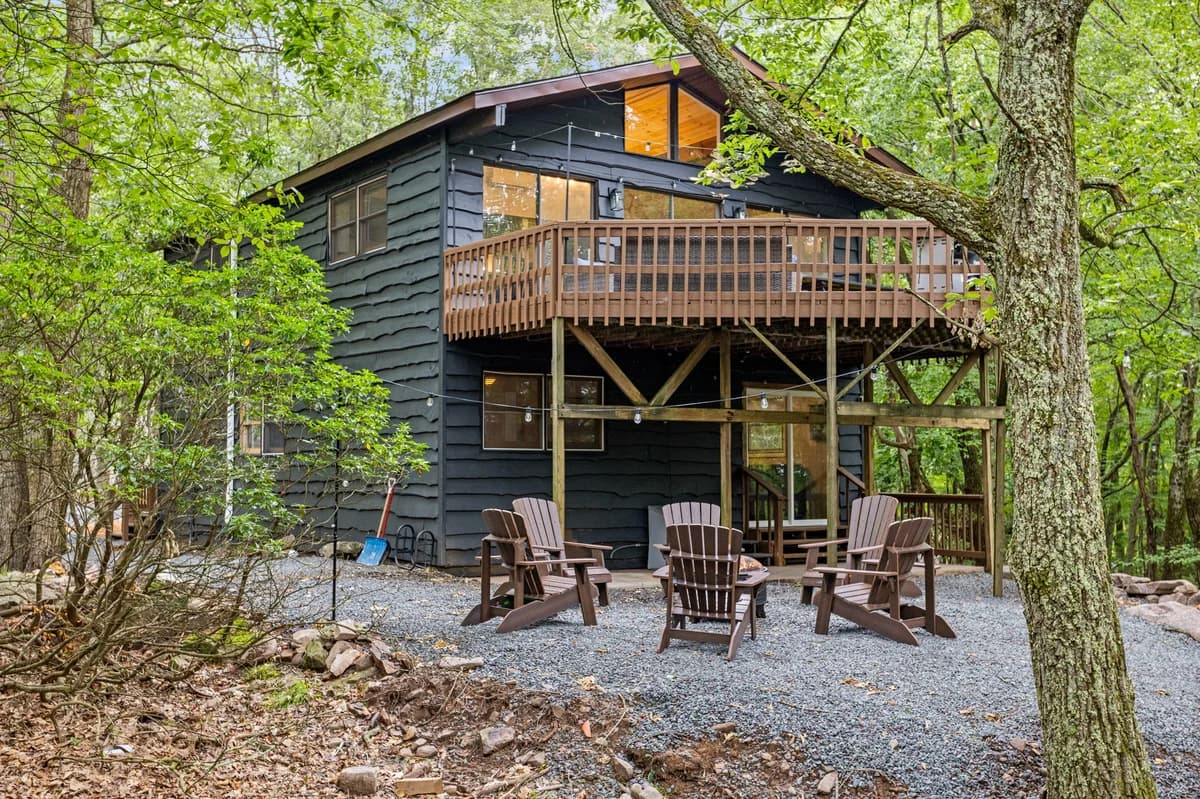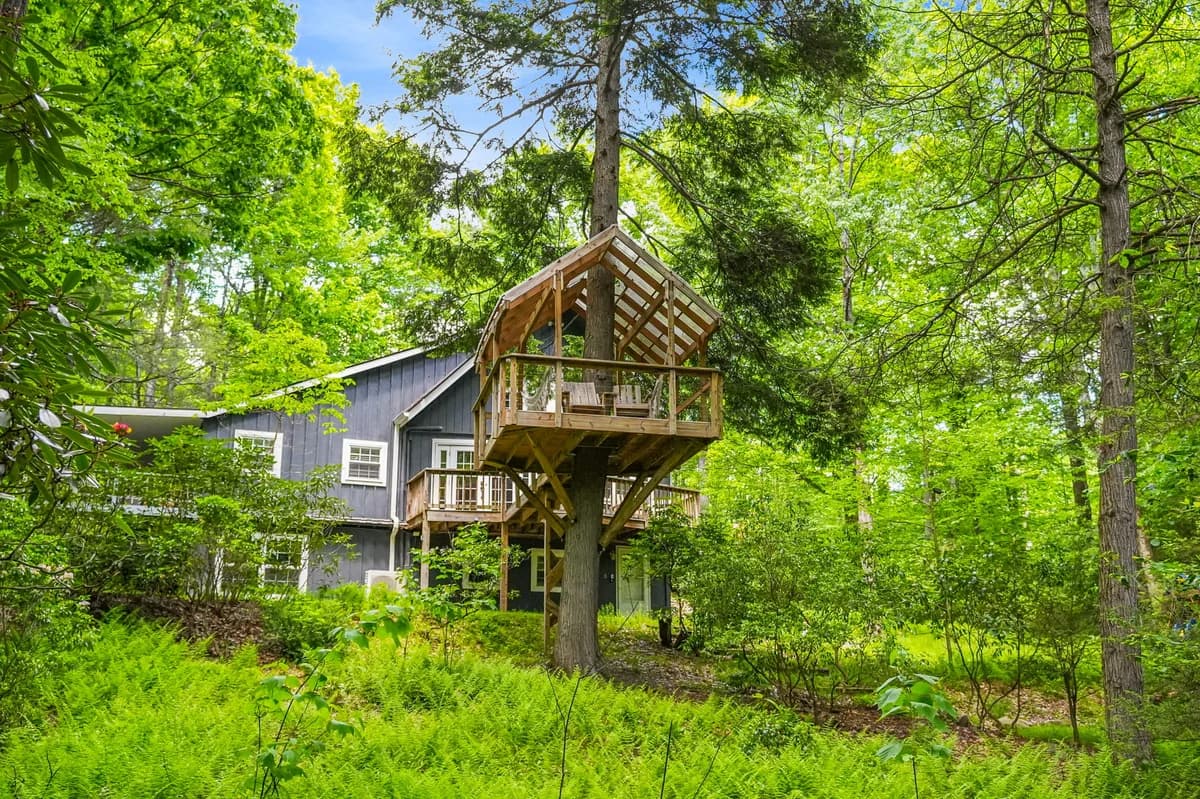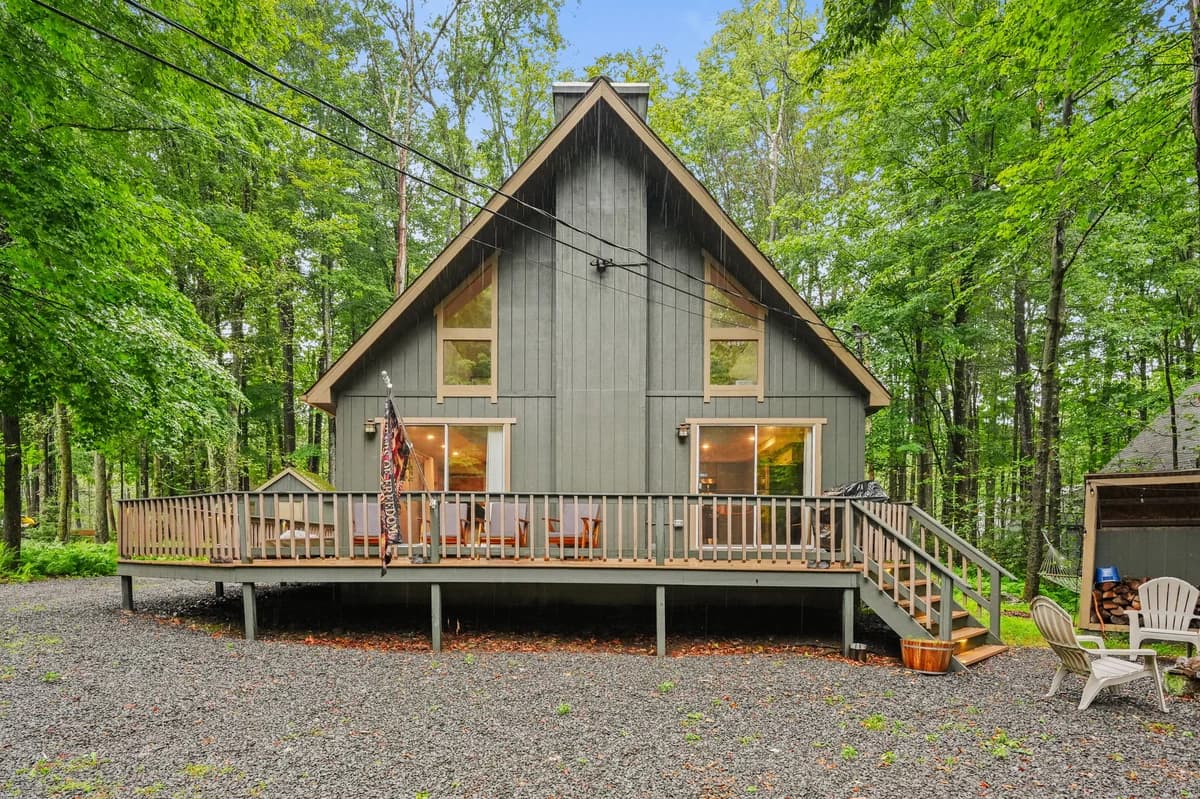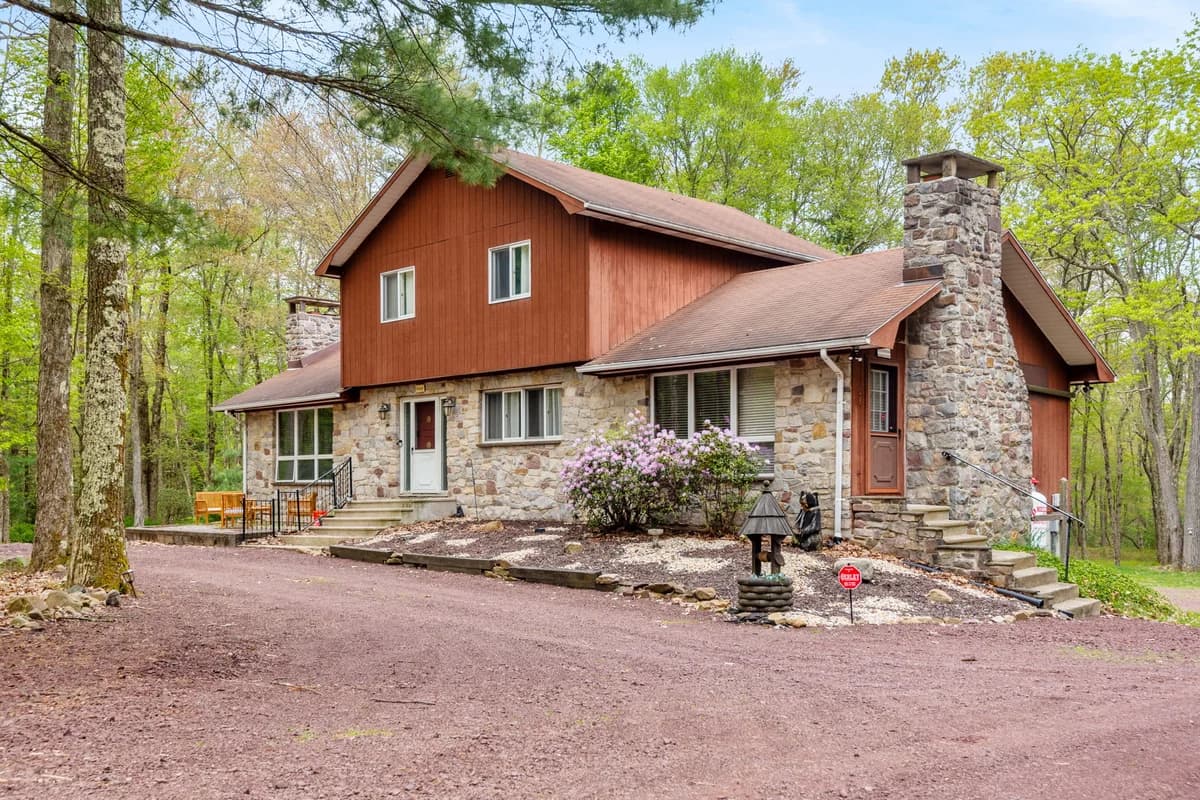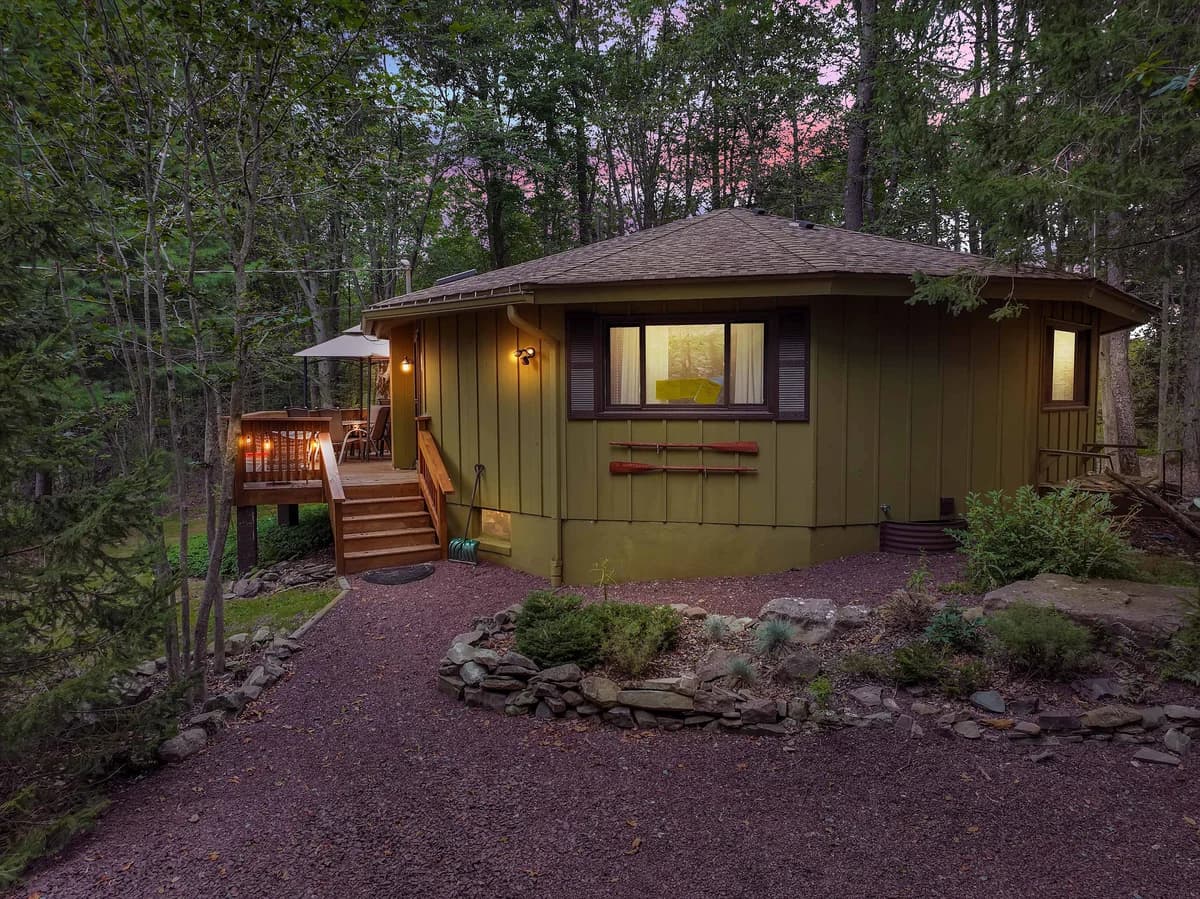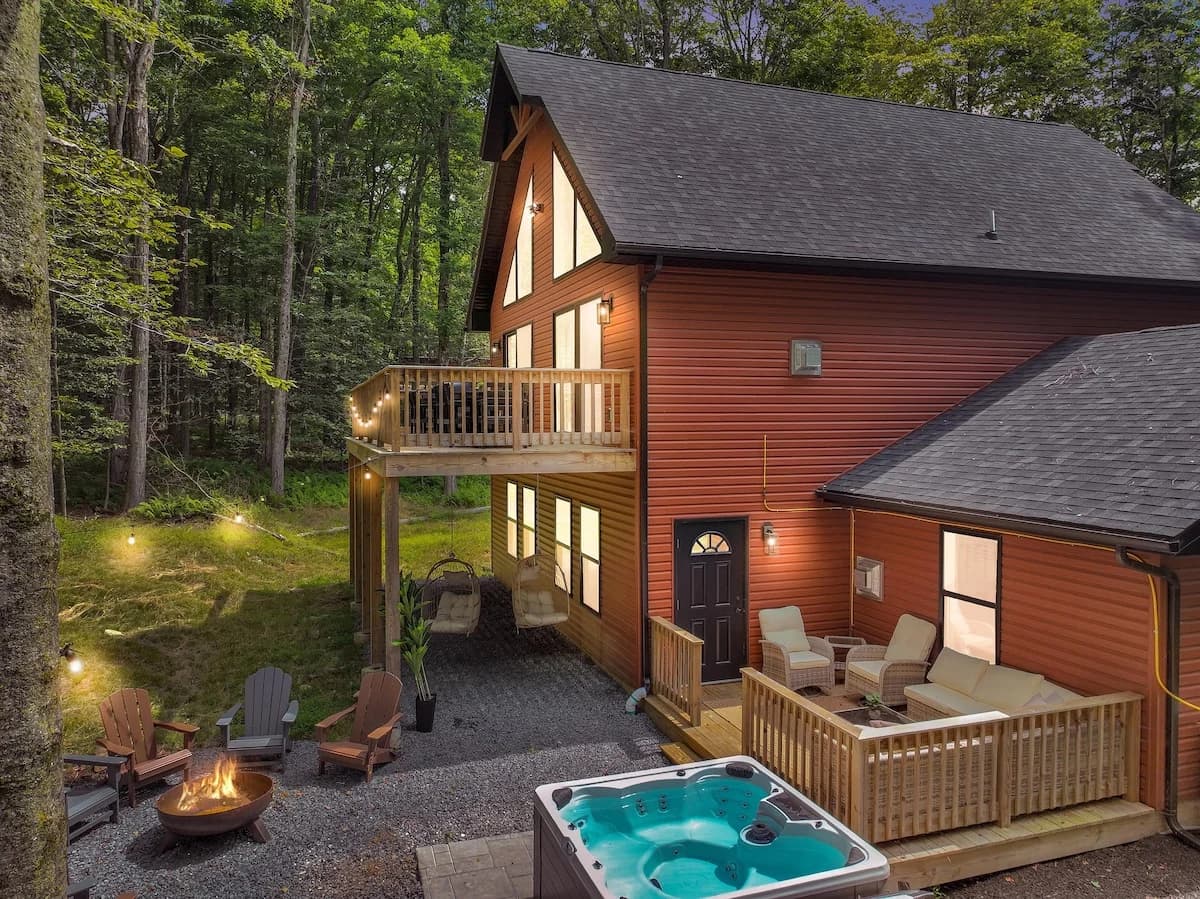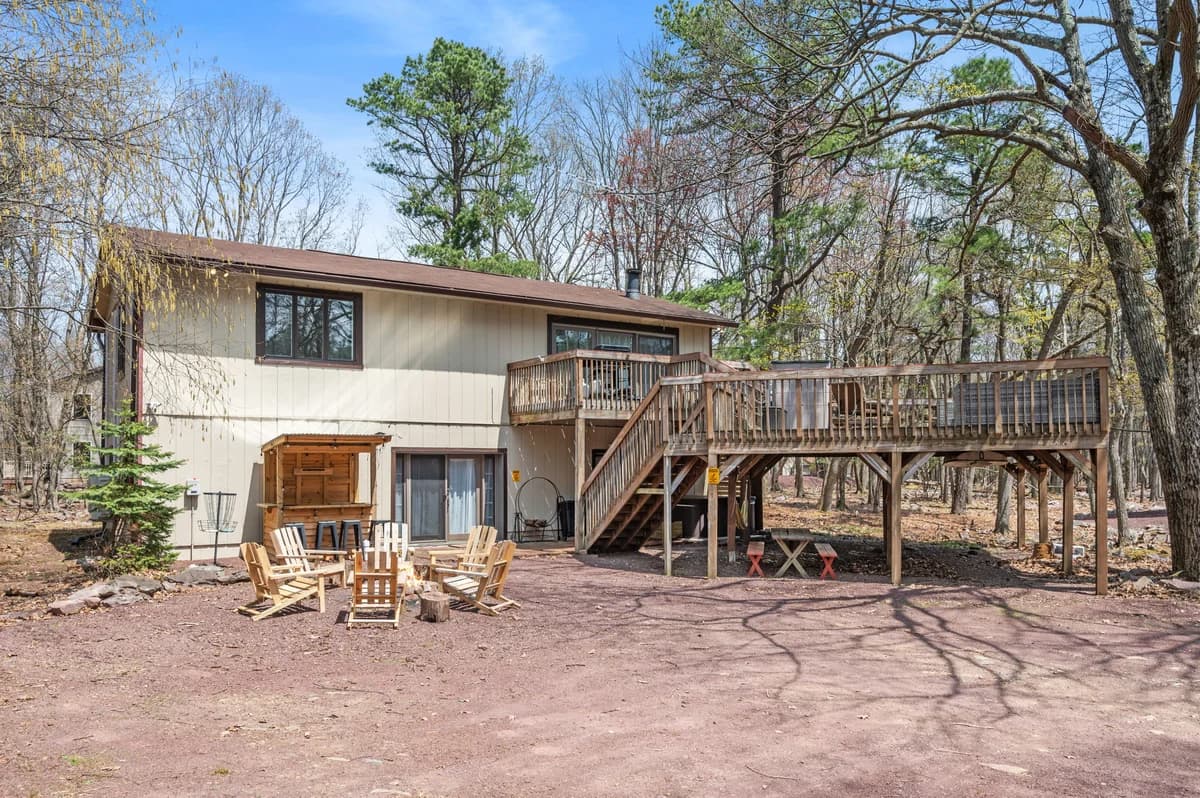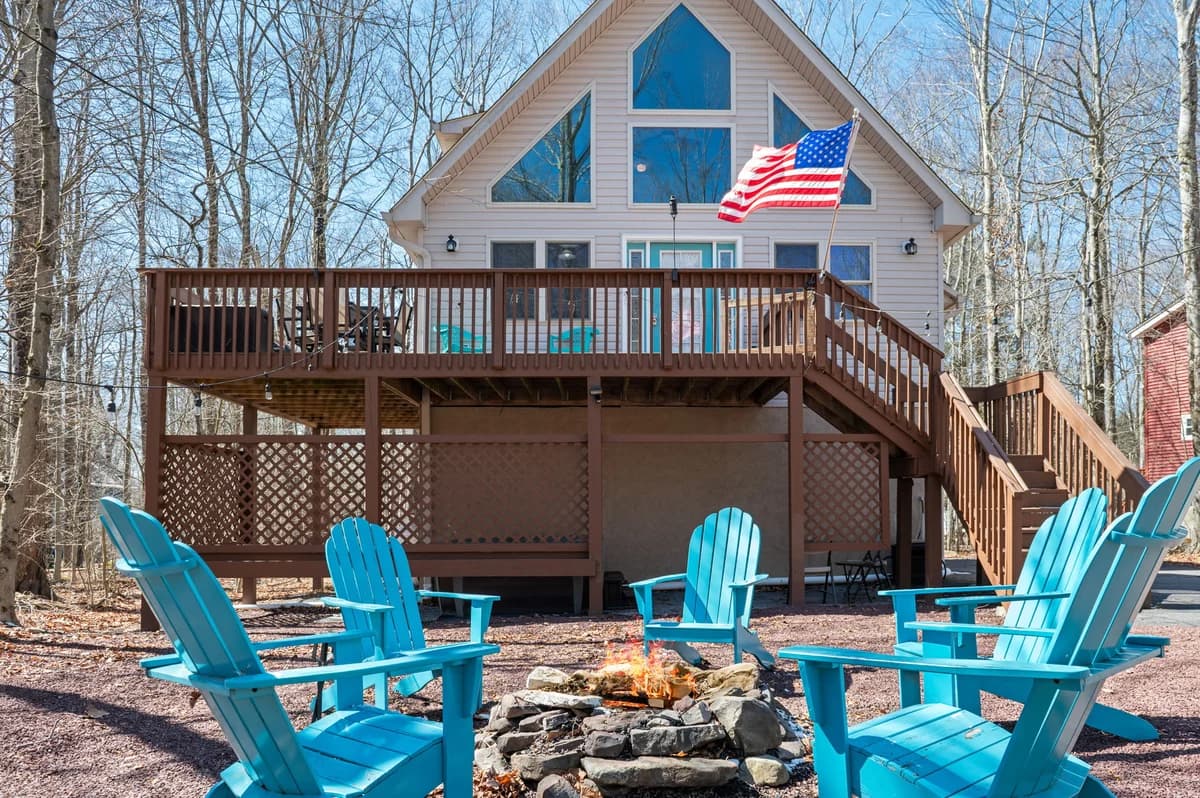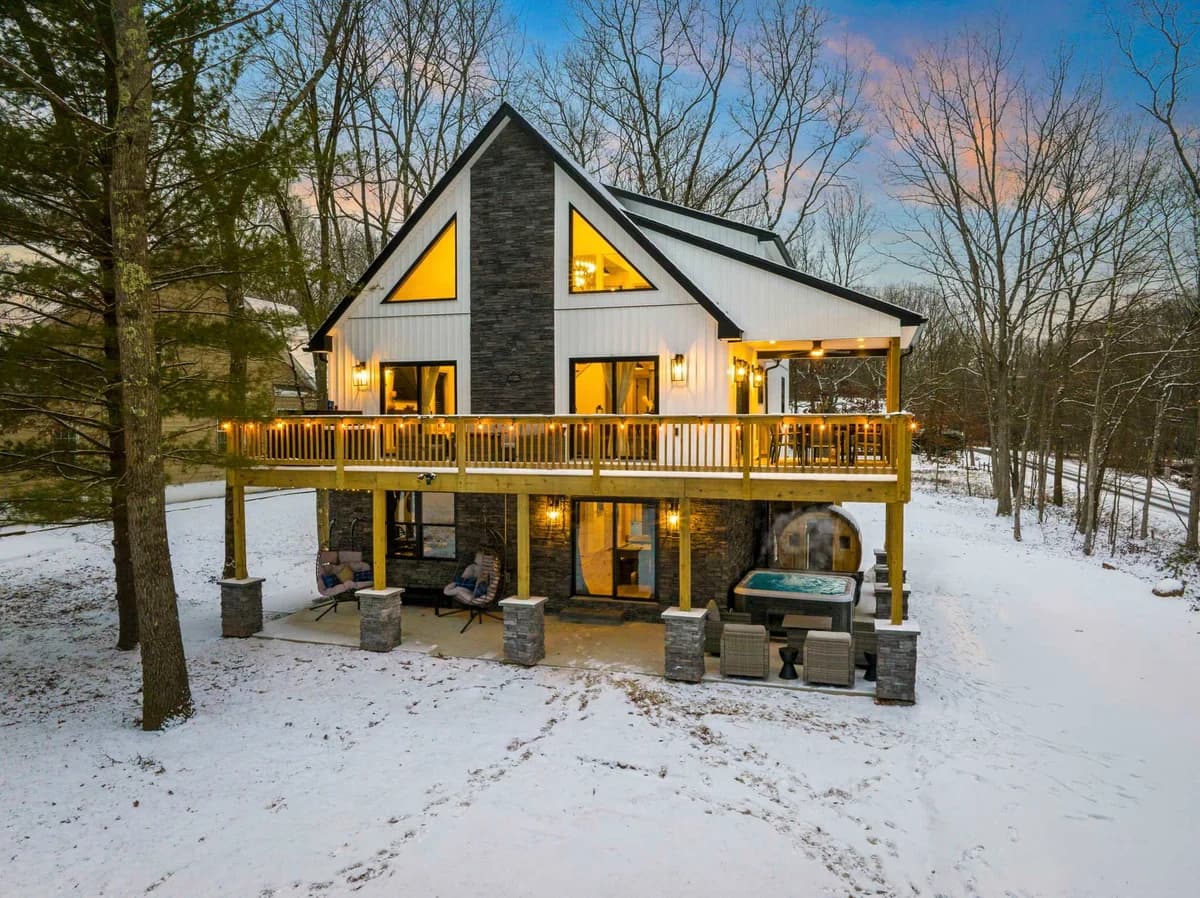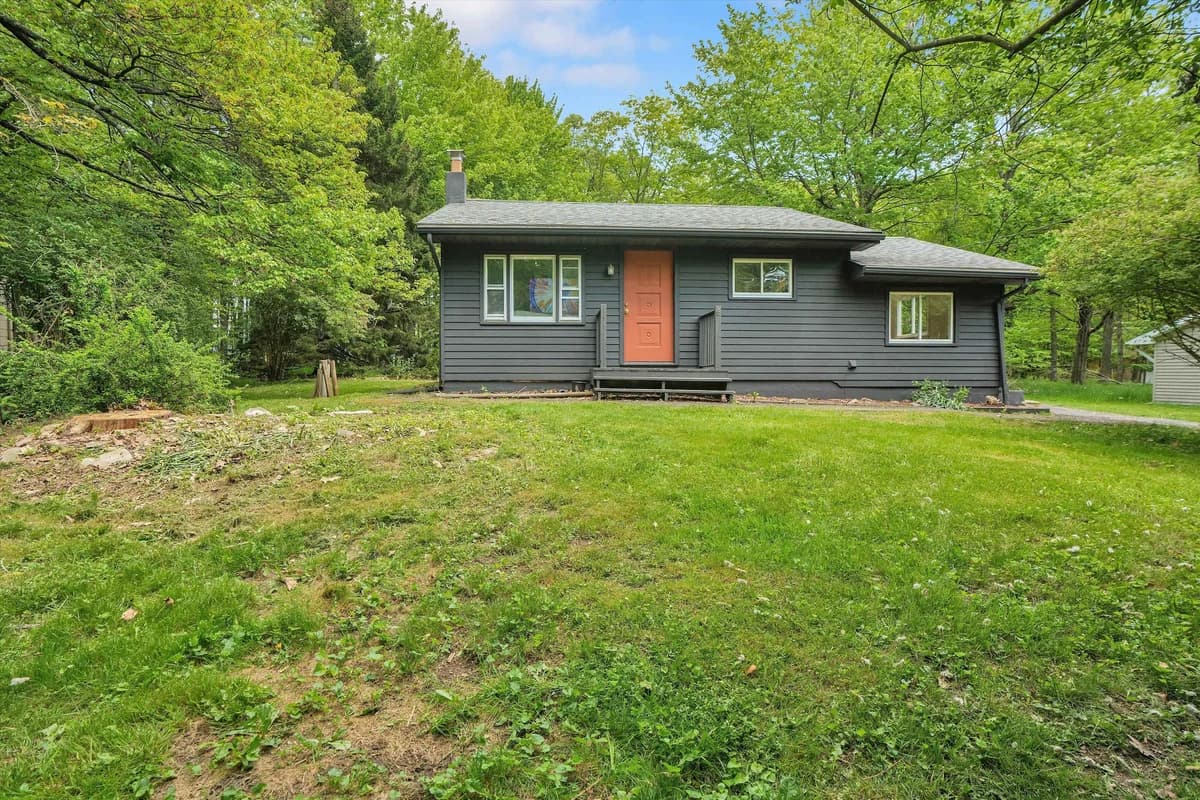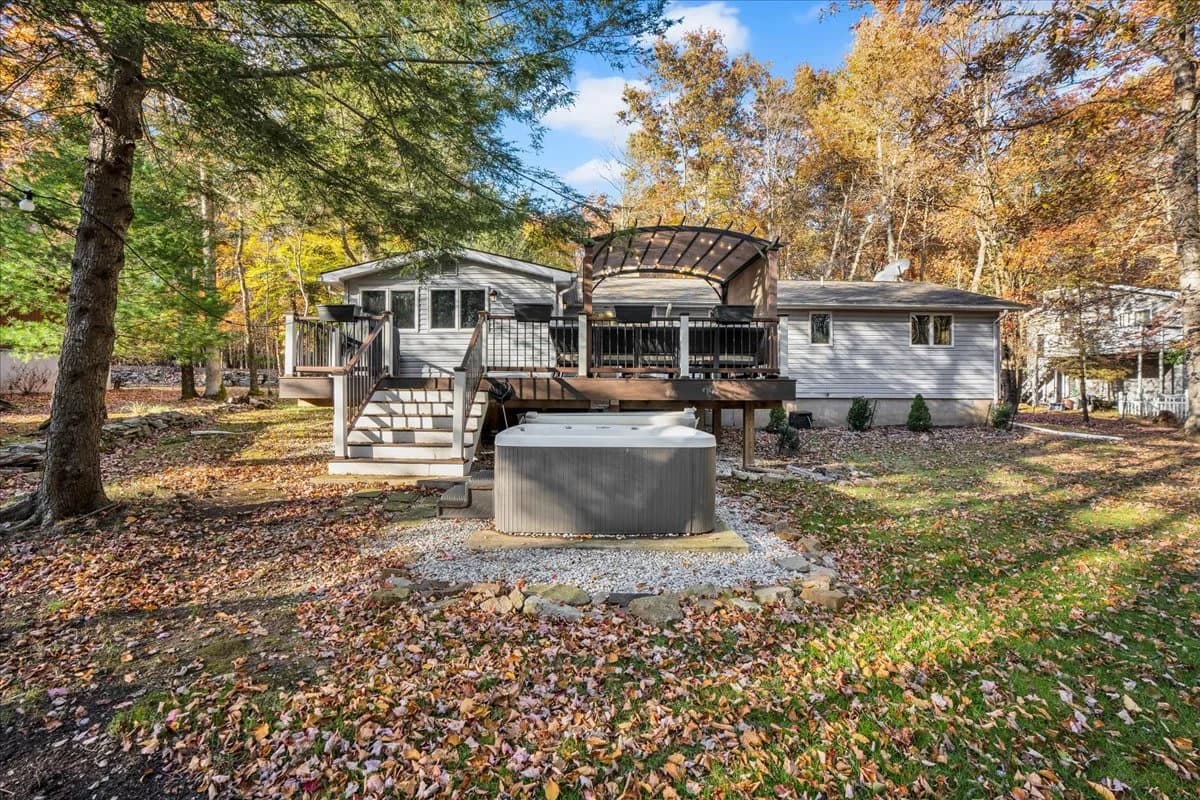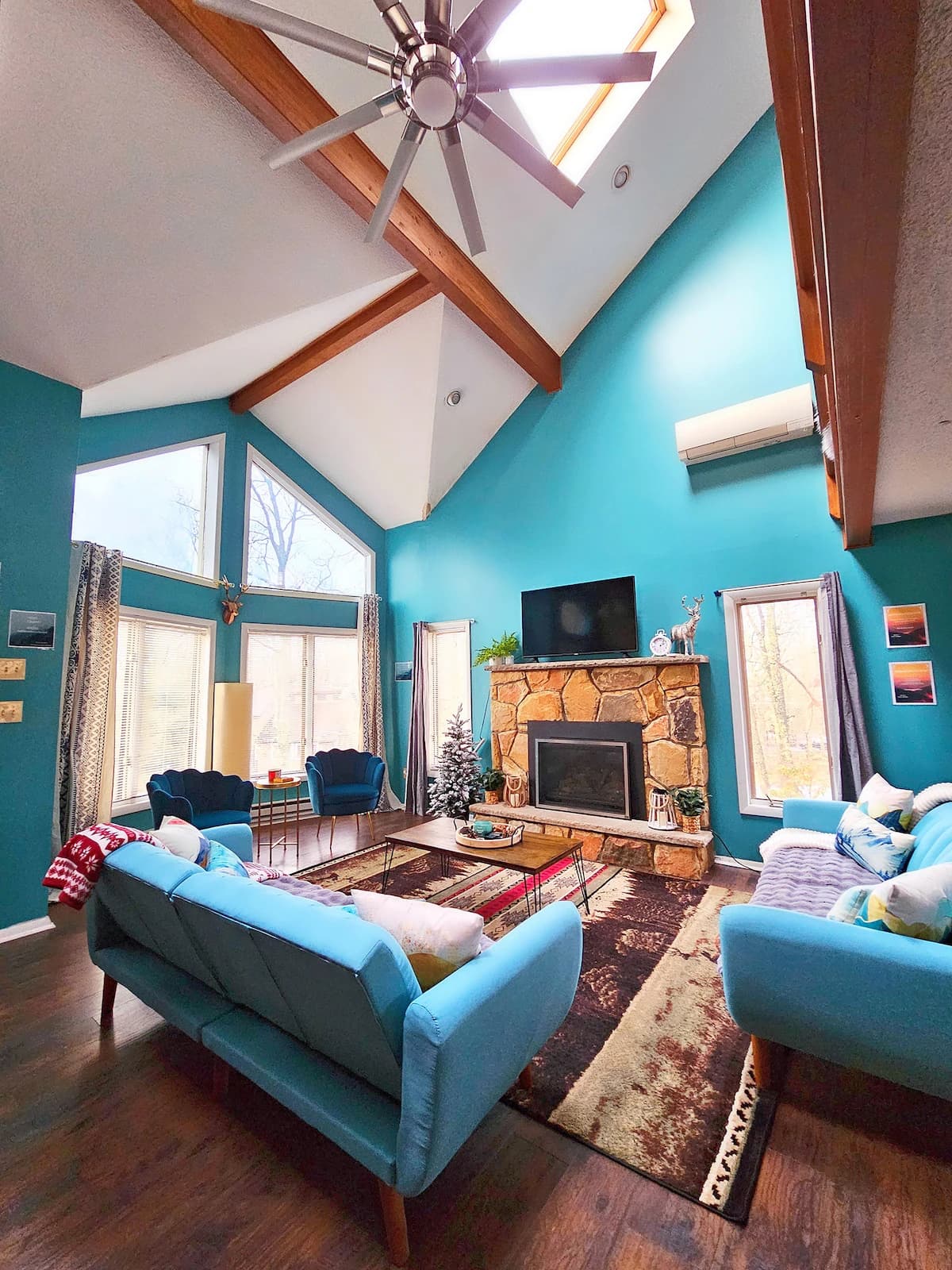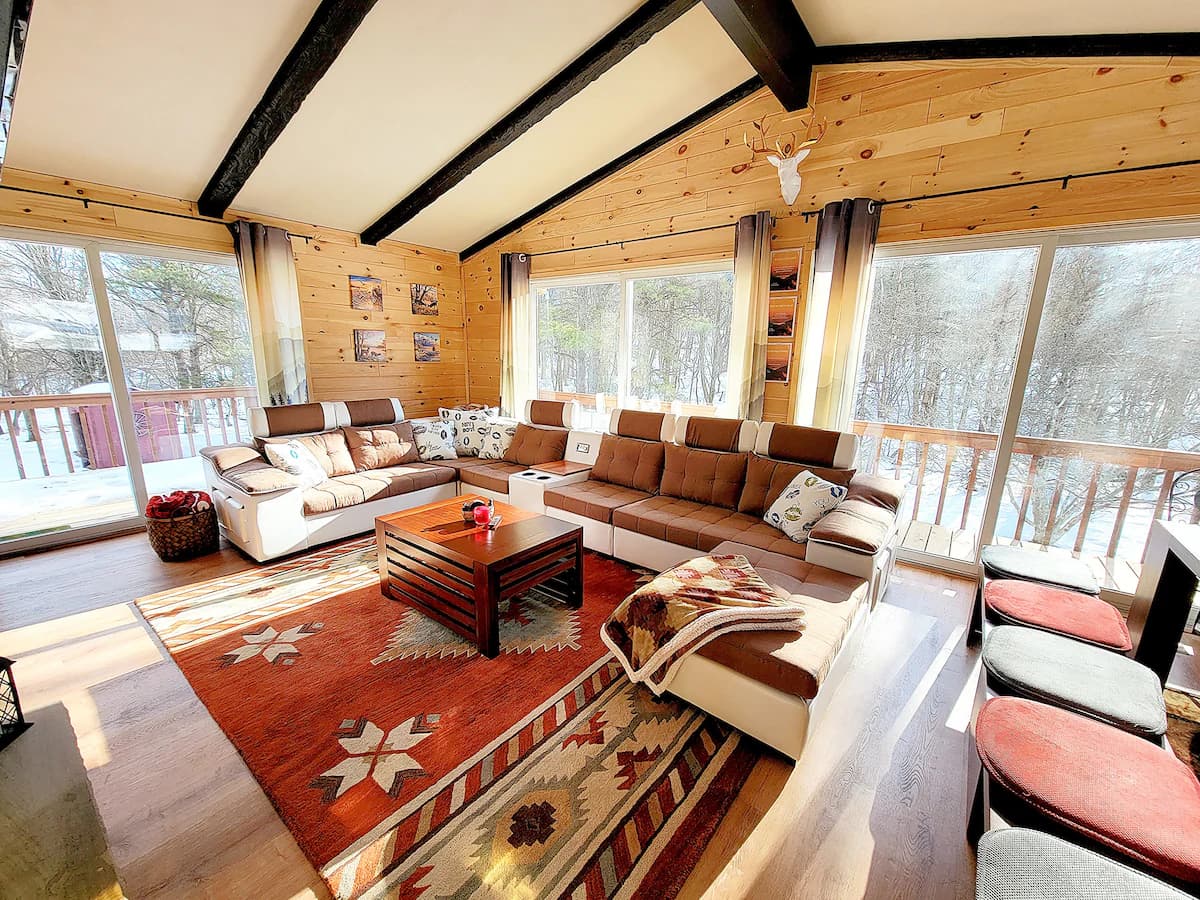
A fire pit is where a Pocono trip slows down. S'mores with the kids, a late talk with friends, or just watching the stars come out over the trees. Every home on this page has a fire pit.
Before you strike a match, take two minutes to read the local burn rules and firewood tips below. They keep the woods, and the house, safe.
Campfire basics (from Smokey Bear)
- Keep the fire small, not tall. Start with tinder in the middle and kindling around it.
- Light it with a match or lighter. Never use gasoline or other flammable liquids.
- Keep a close eye on the fire, and on kids and pets near it.
- To put it out: drown it with water until the hissing stops, stir the embers with a shovel, drown it again, then hold the back of your hand over the ashes to check they're cool.
- If it's too hot to touch, it's too hot to leave.
Pennsylvania burn rules
Pennsylvania's wildfire danger is highest in spring (March, April and May) and again in October and November, according to the state Department of Conservation and Natural Resources (DCNR). DCNR says 99 percent of the state's wildfires are caused by people.
During dry spells a county can declare a burn ban. It lasts up to 30 days and can be extended. Townships and counties can also have their own burning rules. DCNR's advice is simple: check with local authorities that burning is allowed. Ask your host about the fire pit rules for the home and the community, and skip the fire on windy, dry days.
Don't bring firewood from home
Firewood can carry tree pests like the spotted lanternfly. Pennsylvania bans untreated firewood brought in from other states, and firewood is on the regulated list in the state's spotted lanternfly quarantine. DCNR asks visitors to state parks to buy or burn firewood cut within 25 miles. The easy answer: ask your host where to buy wood nearby, and leave any extra behind for the next guests rather than taking it home.
Stargazing from the fire pit
- Go around a new moon or a thin crescent. A full moon washes out the fainter stars.
- Turn off flashlights and phone screens and give your eyes 15 to 30 minutes to adjust to the dark.
- Look for the Perseid meteor shower in mid-August and the Geminids in mid-December.
- The darkest Pocono skies are in northern Wayne County. Pennsylvania's famous dark-sky park, Cherry Springs State Park, is in Potter County in the north-central part of the state, a long drive away.